Why Your Ecommerce Ads Stop Working (And How to Fix It)
Ecommerce ads stop working due to creative fatigue, system decay, & funnel gaps. Learn how to diagnose issues and when a Creative Strategist fixes performance.
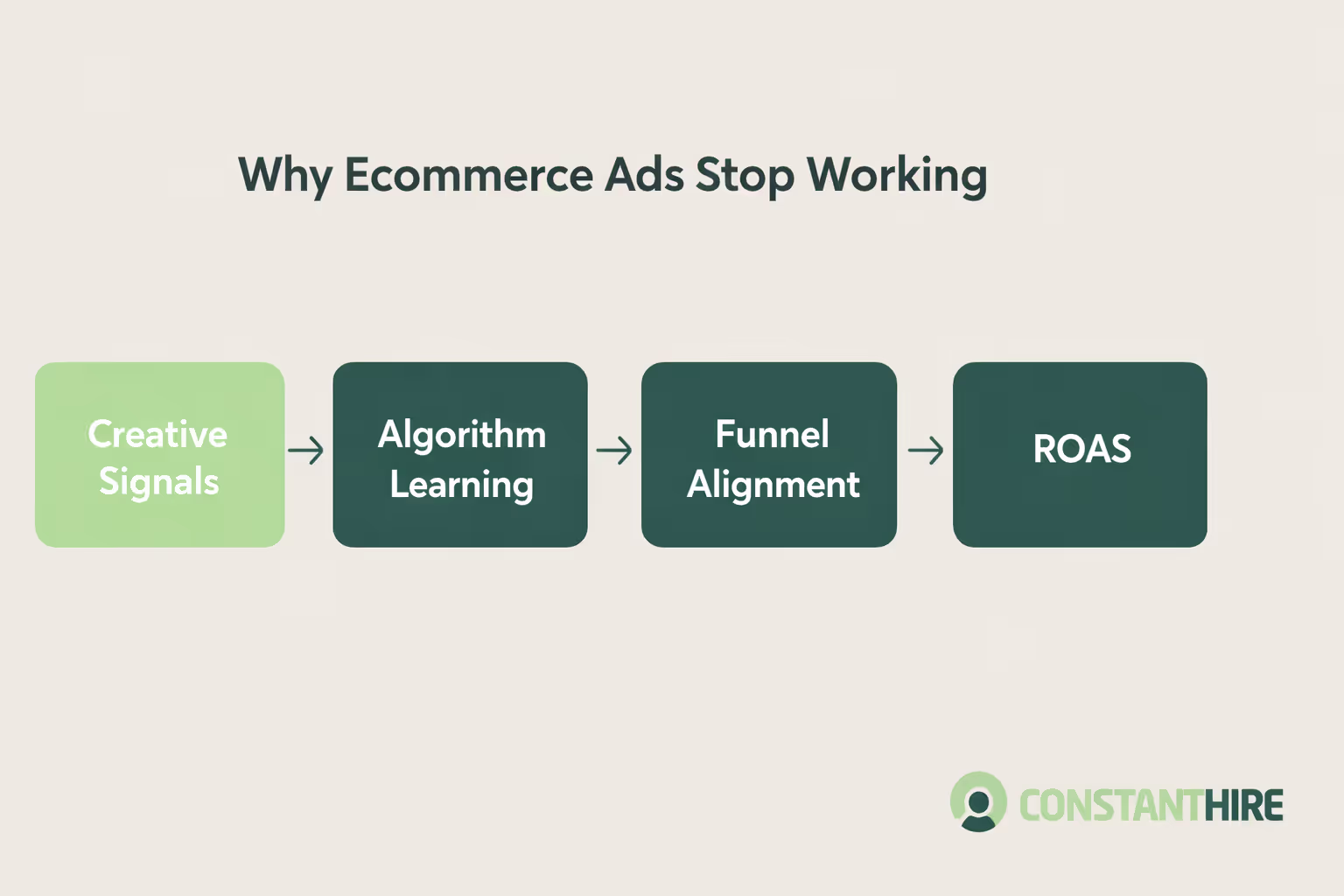
Your ecommerce ads stop working because most brands rely on outdated tactics, over-optimize targeting, under-invest in creative, and run the same ideas for too long. In 2026, platform algorithms reward fresh, relevant creative systems, not incremental media tweaks. When performance for paid ads declines, the issue is rarely the ad account or daily budget. It is usually a creative and system problem.
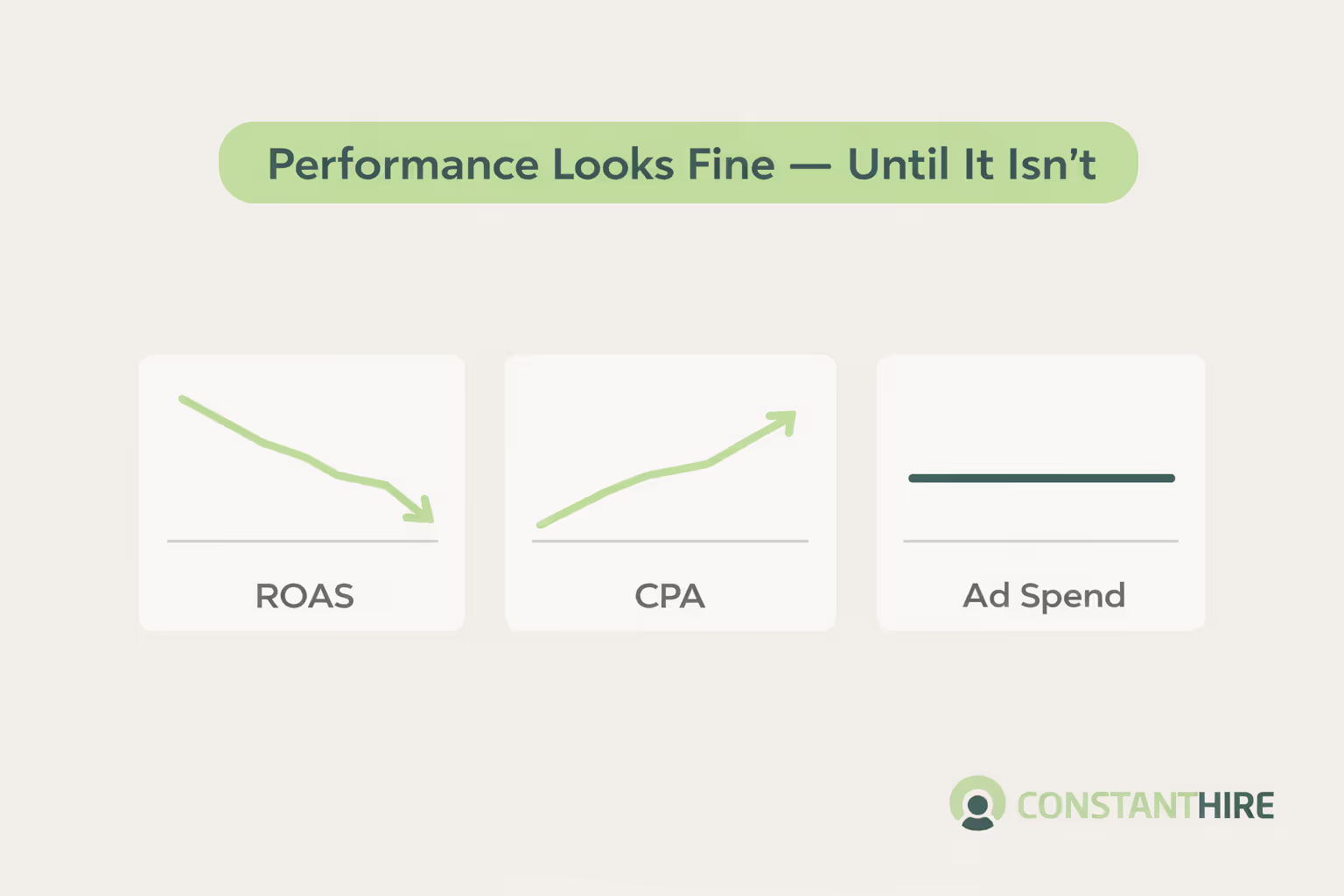
This pattern is showing up faster across ecommerce stores running Facebook ads and Google Ads at any meaningful ad spend. Brands scale to a new level, performance holds briefly, then ROAS slides while CPC rises. Teams and business owners respond by adjusting bids, audiences, or campaign structure, but results keep degrading.
The reason is structural. Algorithms are broader, signal loss limits targeting precision, and competitors copy formats within weeks. What used to work at $5K per month often fails at $50K.
This article breaks down why your ecommerce ads stop working and how to fix your ads campaign in a way that supports smarter hiring decisions
What’s Actually Happening With Ecommerce Ads Right Now?
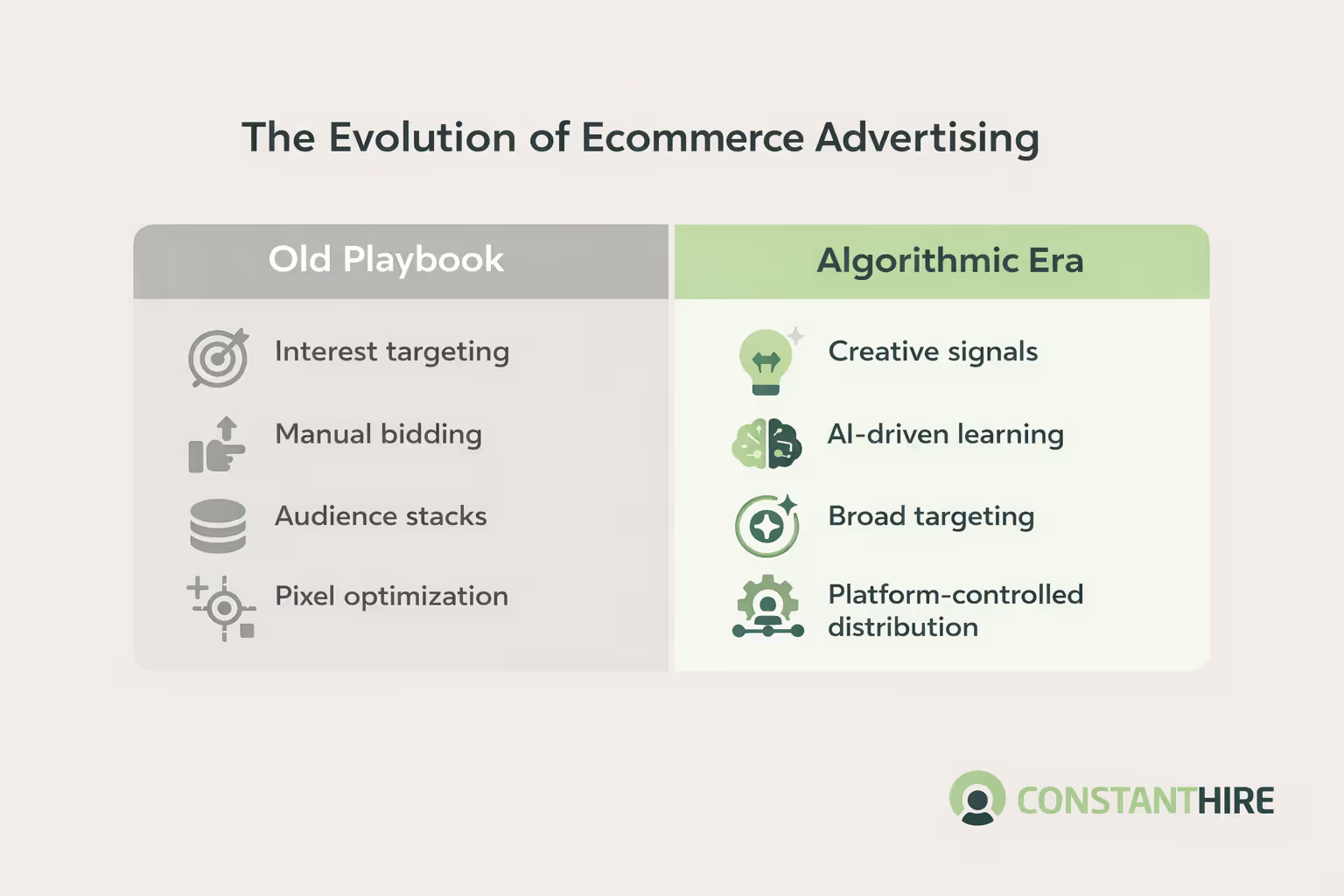
Why ecommerce ads stop working has less to do with platforms and more to do with how brands operate inside them. Algorithms across Facebook ads, Google Ads, and Performance Max are broader, not smarter. They rely on creative signals and conversion feedback rather than tight audience controls.
We have entered the Algorithmic Era, where global ad spend has surpassed the $1.1 trillion threshold, yet the return on that investment is facing structural erosion. This isn't just a feeling; the technical data proves it.
Between 2023 and 2025, American brands saw Customer Acquisition Costs (CAC) jump 40–60%.
Simultaneously, the Zero-Click reality has arrived: organic click-through rates for queries featuring AI Overviews (AIO) have plummeted by 61%, while paid search CTR in the US has seen a staggering 68% decline.
For many brands, the system was fragile to begin with, and the collapse of traditional search has finally broken it.
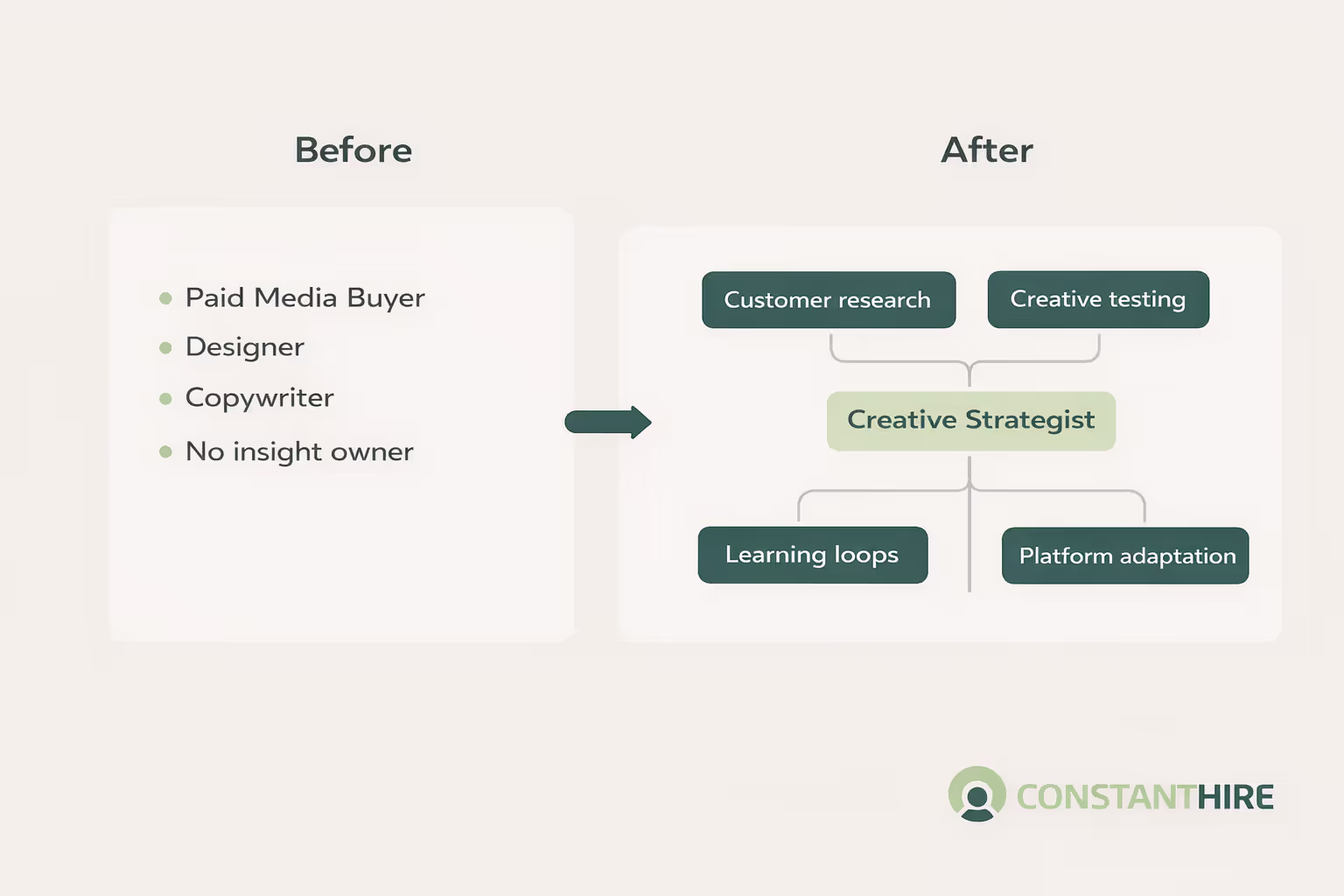
Media buying has become commoditized; most ecommerce brands use similar digital marketing tactics, such as identical bidding strategies, pixel setups, and dashboards. That makes creative the primary differentiator, yet in many teams it sits downstream of a performance marketer or Head of Growth, with no dedicated owner responsible for insight velocity or iteration. When creative stalls, ad performance drops fast.
At Constant Hire, we’ve seen that the brands surviving this shift aren't just “spending more”, they are the ones who have fundamentally re-engineered their team structure. As the #1 recruiting agency for high-growth DTC brands, we’ve tracked a 300% increase in the demand for talent that can navigate this “Zero-Click” landscape, proving that the competitive advantage in 2026 is no longer your budget, but who is managing it.
Global Advertising Expenditure and Channel Growth 2025-2026
Channel
2025 Spend (USD)
2026 Projected Spend (USD)
Annual Growth Rate
Total Global Ad Spend
$1.05 Trillion
$1.10 Trillion
5.1%
Digital Advertising
$862 Billion
$920 Billion
6.7%
Retail Media
$58.79 Billion
$67.08 Billion
14.1%
Online Video
$186.5 Billion
$208.0 Billion
11.5%
Social Media
$248.6 Billion
$277.0 Billion
11.4%
Search Advertising
$313.7 Billion
$352.0 Billion
12.2%
Connected TV (CTV)
$33.35 Billion
$37.00 Billion
10.9%
(Source) - Channel growth rates cited directly; spend figures compiled from forecast totals and channel mix projections.Note: Other forecasters (e.g. WPP Media) use different category definitions and methodologies.
The 5 Real Reasons Ecommerce Ads Stop Working
1. Creative Fatigue Sets In
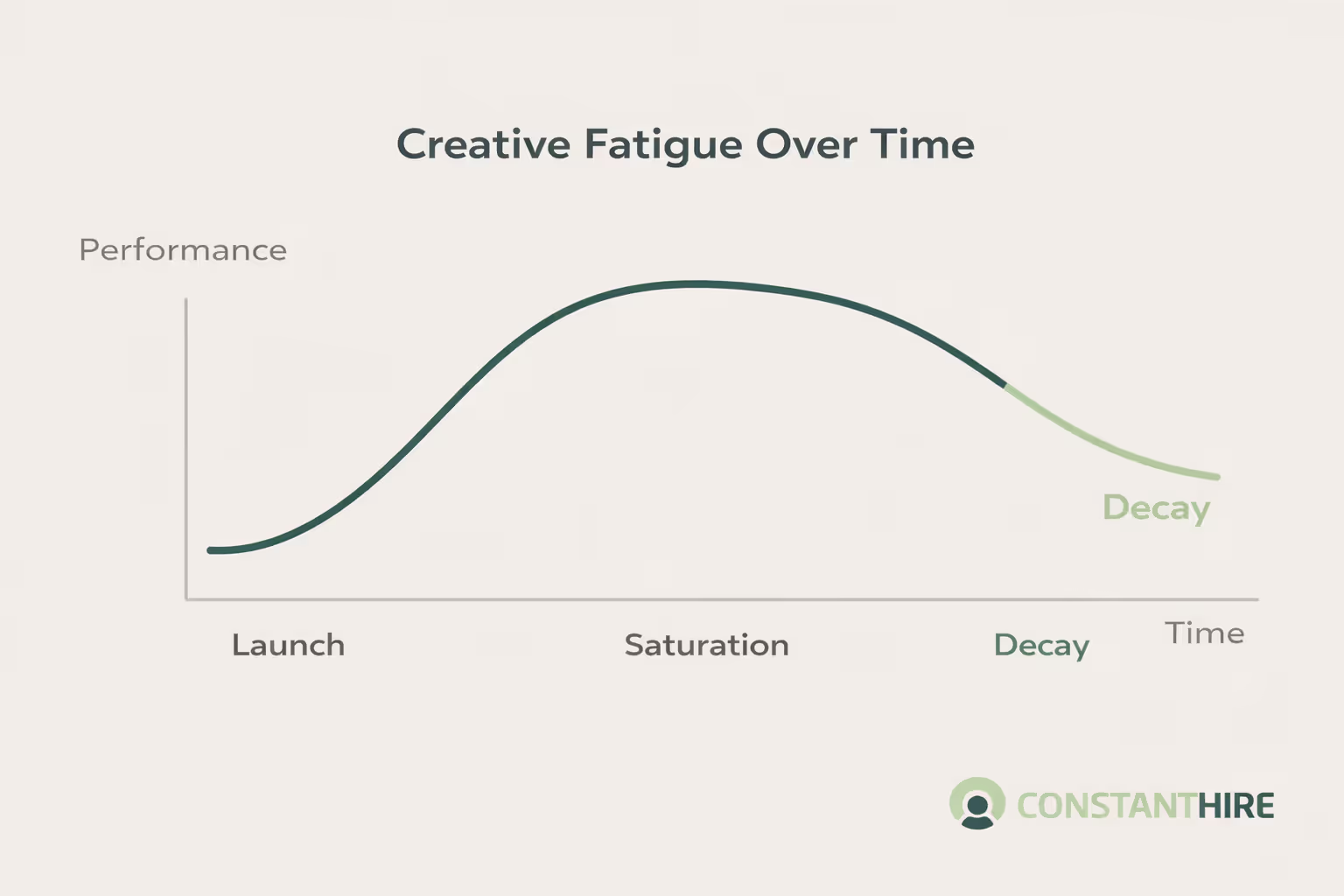
Creative fatigue in ecommerce happens when the same message, structure, and call-to-action run too long. Ads that worked at $5K per day fail at $50K because frequency rises and attention drops.
In the US, the technical levers of media buying have effectively vanished. By 2026, programmatic advertising accounts for a staggering 91.2% of all digital display spend in the United States.
Because nearly every dollar is managed by an automated auction, brands that hire paid media buyer specialists with platform-specific technical skills are better equipped to navigate these high-velocity auctions. The algorithm often “force-feeds” the same creative to the same high-intent American consumers until total fatigue sets in.
On Meta, this shows up as stable impressions but a sharp rise in CPA; on Google, you'll see your “Share of SERP” presence remain high even as your actual conversion volume evaporates. You aren't losing the auction; you're losing the audience's attention.
This is not a platform bug. It is a signal problem driven by static ad creatives.
2. Your Creative Looks Like Everyone Else’s
Most ecommerce ads now look interchangeable. Founder talking head, UGC testimonial, product images on a white background. Competitor-inspired is not insight-driven.
93% of marketers report UGC outperforms branded content, but saturation has flattened results without differentiation. When every ecommerce brand copies the same format, messaging stops cutting through.
Polish does not save generic ads. Distinct beliefs and angles do.
3. You’re Optimizing Targeting Instead of Meaning
Broad targeting is now the default across ecommerce advertising. Creative does the targeting. Algorithms infer relevance from engagement, not interest stacks.
When brands over-focus on audiences, they ignore meaning. The algorithm rewards ads that clearly address a specific problem, objection, or high-intent scenario. Relevance signals come from hooks, framing, and proof, not ad account settings.
This is why optimizing bids or daily budget rarely fixes ad performance.
4. Your Funnel Breaks the Promise
In 2026, the “funnel” no longer belongs to the brand; it belongs to the AI Shopping Gatekeeper. Because over 60% of US searches are now Zero-Click, the journey often ends on the search page itself.
If your landing page lacks “entity clarity” (structured, machine-readable data), AI agents like Amazon’s Rufus or Google’s AIO will fail to align your product with the user’s intent. Your ads campaign is likely breaking because an AI agent decided your product wasn't the best solution before the customer even had a chance to click.
Misalignment between ad messaging, landing page structure, checkout flow, and testimonials kills conversion efficiency, a problem that often requires CRO experts for ecommerce to diagnose beyond surface-level metrics. Even small gaps reduce trust. This shows up as high CTR with low conversion rate in Google Ads and Facebook ads.
When checkout friction increases, ROAS collapses regardless of traffic quality.
5. There’s No Real Testing System
Random tests are not a strategy. Many ecommerce businesses launch different ad creatives without documenting insights or learning loops.
Without structured testing, teams repeat ideas instead of evolving them. Set-and-forget campaigns decay quietly until performance falls off a cliff. This is a system failure, not a creative talent issue alone.
Why Ecommerce Ads Suddenly Stop Being Effective
Ads rarely fail overnight. Performance decay is delayed. Fatigue accumulates, messages saturate, and buyer psychology shifts.
Seasonality amplifies this. As consumer behavior changes, stale messaging loses relevance. In 2026, zero-click searches will most likely exceed 80% of queries, compressing discovery windows. Ads that rely on weak differentiation stop converting faster than before.
This explains why ads worked last month but not now. The system stopped learning.
Quick Diagnostic: What’s Actually Broken?
Creative Problem or System Problem?
Use this checklist to diagnose why ecommerce ads stop working:
Are hooks still holding attention across social media placements?
Are new angles shipping weekly, not monthly?
Are insights documented from Google Analytics, reviews, and support tickets?
Are ads refreshed proactively or only after ROAS drops?
Does your current team have a dedicated lead whose sole KPI is creative iteration and insight velocity?
If you answered “no” to any of these, your problem isn't your ad account, it's your headcount.
Channel-Specific Symptoms
Why Meta Ads Often Stall First
Facebook ads hit fatigue fastest due to volume and repetition. Learning phase resets mask creative decay, causing brands to misdiagnose the issue.
Why Google Ads Can Underperform
Google Ads failures often look like keyword problems. In reality, intent mismatch and weak landing page alignment reduce conversion rate, especially in Performance Max.
Why Amazon Ads Stop Converting
Amazon ads rely heavily on reviews, offer strength, and product pages. Creative limitations make differentiation harder, so saturation hits earlier, which is why many brands eventually need to hire a dedicated Amazon brand manager to regain control of positioning and conversion signals.
The Real Fix: Thinking Like a Creative Strategist
A creative strategist in ecommerce is the role that defines customer insights, translates them into ad systems, and builds repeatable learning loops that scale performance. This is why brands increasingly choose to hire a creative strategist instead of adding more execution layers.
The fix requires a total shift in measurement. Modern US Creative Strategists are moving away from unreliable Multi-Touch Attribution (MTA) and toward Marketing Mix Modeling (MMM) and Incrementality Testing.
They treat creative as the primary lever to maintain a healthy LTV:CAC ratio, which for a sustainable US brand in 2026 must be at least 3:1. They don't just ask about clicks; they ask about Generative Engine Optimization (GEO), ensuring the brand is cited and validated by the AI assistants that now manage the American path to purchase.
This shift reframes ads strategy from execution to diagnosis.
What a Healthy Ecommerce Ad System Looks Like
Continuous Research
Strong systems pull insights from reviews, Reddit threads, support tickets, customer calls, and social comments. This research feeds messaging, not just copy.
Structured Creative Testing
Testing follows hypotheses. Teams test hooks, angles, and objections, not just different ad formats. Results are documented and reused.
Volume + Diversity
Scaling requires more ideas, not perfect ones. High-performing ecommerce brands run multiple creative lanes in parallel to avoid saturation.
How to Fix Ecommerce Ads That Aren’t Working (Step-by-Step)
The following approach stabilizes ROAS and supports smarter ad spend decisions.
Diagnose the failure point across creative, funnel, and metrics.
Refresh insight before changing formats.
Rebuild the promise so the ad and landing page align.
Test systematically with documented hypotheses.
Iterate fast and kill losing ads quickly.
The Rise of Native Social Commerce
The most successful US brands in 2026 have stopped trying to drag users out of their feeds and onto their websites. TikTok Shop is projected to generate $87B in GMV in 2026, growing 56% year-over-year.
In this environment, the “ad” and the “storefront” are the same thing. If your creative isn't social-first and shoppable, you are fighting a losing battle against the platforms that now control the transaction layer.
Final Thoughts
Ecommerce ads do not just stop working. Systems decay when learning stops. Creative is the lever that compounds across platforms, channels, and budgets.
The fix requires a role that most traditional marketing agencies aren't equipped to provide: the Creative Strategist. If you are ready to work with a creative strategist recruitment agency that treats ads as a learning system, Constant Hire is the specialized partner for your search.
This isn't just a content creator; it’s a high-level architect who bridges the gap between data-driven media buying and high-velocity creative production.
Because this role is so new and specialized, the “talent gap” in 2026 is massive. Most brands fail here because they hire a generalist when they need a specialist.
At Constant Hire, we built the industry’s most rigorous vetting pipeline for Creative Strategists, specifically designed to identify candidates who understand GEO (Generative Engine Optimization) and Incrementality Testing.
We don't just find you a hire; we find you the system-builder who protects your ROAS. Contact us today and hire a Creative Strategist built for scale, not short-term fixes.
FAQs
Why are my ecommerce ads not converting?
Most ecommerce ads fail due to creative fatigue, weak messaging, or landing page misalignment. Fixing it starts with a repeatable creative testing framework, not one-off ad swaps. When ads promise one outcome and the page delivers another, conversion rate drops regardless of traffic quality.
Are online ads still worth it in 2026?
Yes, but only with strong creative systems. Rising CAC and zero-click behavior mean ads must carry more meaning and clarity than before to sustain ROAS.
How often should ecommerce brands refresh creatives?
High-performing ecommerce brands ship new creative weekly. Refresh cycles depend on ad spend, but proactive updates prevent fatigue and protect performance.
Connor Gross founded Constant Hire in 2024. An operator turned founder with deep experience building and scaling e-commerce brands. He previously sold an Amazon brand and generated over $30M in DTC revenue through private-label Shopify businesses. He now helps fast-growing DTC brands and agencies hire top talent across marketing, creative, ops, and sales. From E‑com Managers to TikTok Creators and Heads of Growth, he knows what great looks like, and how to recruit it.



.avif)