Ecommerce operations is the planning, purchasing, order fulfillment, shipping, returns and channel compliance work behind every order that helps DTC and CPG brands turn demand into delivered, profitable revenue.
That's the whole job. Most founders only ever meet one piece of it, whichever piece just broke.
Orders are landing late. Your bestsellers are out of stock while slower SKUs pile up in the warehouse, and the team running your warehousing and fulfillment can't keep pace. You don't know yet whether the fix is a head of operations, a supply chain director or a COO.
The title follows the problem. In the searches we run, the fix is usually a narrower hire than the one the founder reaches for first, and it starts with naming the seat where the problem sits.
A title that merely sounds senior can wait. This piece maps each symptom to the seat built to own it, demand planner through COO.
What ecommerce operations covers
Ecommerce operations covers demand planning and purchasing before an order is placed, then fulfillment, shipping, returns and channel compliance around delivery. Ecommerce operations management connects those functions through shared inventory, delivery and cost targets.
In a DTC operations team, the work moves in the order a product does. Demand planning decides what to buy and when. Sourcing and purchasing turns that plan into purchase orders and supplier terms, and fulfillment gets the order out the door correctly from there.
Outbound shipping and carriers take it the rest of the way, on time and on budget. Returns bring it back the other way, and get graded on cost, customer experience and how fast the customer is made whole.
Channel compliance comes last, keeping a retail or marketplace account in good standing once a brand sells beyond its own online store.
A head of operations, a VP of operations or a COO sits above the other six, owning decisions that cross every layer instead of running just one. Each layer breaks in its own way, which is exactly why the symptom in front of you tells you more than any title on a job board.
Why the job title is the wrong place to start
Operations titles describe different jobs at different brands. In a November 2026 review of 103 operations profiles in Constant Hire's candidate database, 25 held a current title that joined two or more functions, such as operations and logistics, or logistics, purchasing and inventory.
Starting from the title gets costly. Another recruiter had told Carnivore Aurelius to hire an expensive Chief of Staff. The real problem was repeated stockouts and overseas vendors missing their own deadlines at a two-SKU supplement brand.
We placed a fractional demand planning and vendor manager at $2,500 a month, hired from the first five profiles we reviewed.
[IMAGE PLACEHOLDER: Carnivore Aurelius case study screenshot]
All Security Equipment’s previous recruiter sent general managers from small businesses for a COO seat that needed someone who could manage the team, roll out an ERP, and negotiate vendor terms. Once we scoped the role with the founder, we recruited for two seats, a COO and a VP of operations.
Start with what's breaking, then decide the seat. The title comes last.
The problem-to-role diagnostic
Find the symptom that costs the most, read across to the seat that owns it, and check the leaner option before you open a full-time search.
Guessing wrong here still has a cost. All Security Equipment's wrong first guess turned a single search into two, a COO and a VP of operations, and the search closed at $250,000 in all-in compensation once it was scoped correctly.
[IMAGE PLACEHOLDER: All Security Equipment case study screenshot]
Carnivore Aurelius hit the same pattern from the other direction, an expensive generalist search before anyone named the real problem. Same lesson both times. The title you reach for first is rarely the title the symptom needs.
For many founders, the leaner option is the right answer. A brand with real supply-chain complexity can need a dedicated hire before it feels big enough to justify one. A simpler brand can run on a fractional operator long after a similarly sized competitor has hired full-time.
What’s breaking tells you where to hire.
How each symptom maps to a seat
The breakage shows up in different places, and each one points to a different seat. A forecast that doesn't talk to the warehouse creates stockouts on one SKU and overstock on another, a planning problem. A supplier missing delivery dates or imposing minimum order quantities (MOQs) that force excess purchasing creates a sourcing problem instead.
When a third-party logistics partner, a 3PL, picks orders wrong or runs on different numbers than the brand's own system, that's a fulfillment problem. A retailer measuring on-time-in-full delivery, OTIF, or rejecting inaccurate electronic data interchange, EDI, shipment notices creates a separate compliance problem.
Parcel spend climbing on its own, with no change in order volume, points to a logistics problem. Warehouse overtime, safety incidents, or a facility move points to the physical site itself. A founder still approving every PO and exception while teams blame each other is a decision-rights problem.
Seven symptoms, seven different first calls.
Symptom you see
Where it's breaking
Seat to look at first
Leaner option first
Measured on
Bestsellers stock out while slow SKUs pile up in the same quarter
Demand forecast and channel allocation
Demand planner or demand planning manager
Fractional demand planner
Forecast accuracy, weeks of cover, in-stock rate
Suppliers miss dates, MOQs and landed cost keep rising, one factory holds the whole line
Sourcing, procurement and vendor management
Supply chain manager (procurement-heavy)
Fractional vendor or supply manager
Supplier on-time delivery, landed cost per unit
Late orders, 3PL picking errors, Shopify, warehouse and returns out of sync
Post-purchase operations and systems
Operations manager
None at most brands; this is usually the first full-time ops hire
Order accuracy, on-time ship, return cost
Parcel spend climbing, carrier surcharges, slow delivery outside one region
Outbound freight and network
Logistics manager
Absorbed by the operations manager until volume justifies a specialist
Shipping cost per order, delivery time
Retailer chargebacks, OTIF fines, EDI or ship notice errors
Channel compliance
Operations or supply chain manager with retail experience
Test retail depth before hiring a DTC-only operator
Retailer OTIF, deductions as a share of revenue
Warehouse overtime, safety issues, a facility move
Physical site leadership
Warehouse or fulfillment manager; VP of operations from the floor for a move or multi-site build
Interim site lead during a move
Units per labor hour, safety incidents
Founder approves every PO and exception, teams blame each other
Decision rights across functions
Head of operations, VP of operations or COO, set by what transfers
Fractional operator under roughly $15M
Margin, cash conversion, the leaders below
Seat and threshold guidance is Constant Hire's framing, based on the searches we run. It is not a market survey.
For the three manager-level seats (supply chain, operations and logistics), our Operations Coverage Test runs the same logic in three questions. The roughly $15M fractional line in the last row comes from our COO hiring guide.
If two or three rows apply at once, that usually points to the leadership seat covered later in this piece, not three separate hires.
Upstream: stockouts, suppliers and cash tied up in inventory
Stockouts and overstock in the same quarter are a planning problem. Missed supplier dates are a sourcing problem, and the two call for different people.
A demand planner owns the forecast and how units get allocated across DTC, Amazon, TikTok Shop, and wholesale. A supply chain manager owns suppliers, purchase orders, lead times, and landed cost.
The pressure isn't only internal. ShipBob's own 2026 State of Ecommerce Fulfillment report, a survey of 416 ecommerce executives, found that about 80% of brands said 2025 US tariff changes raised their costs.
Tariffs show up in landed cost per unit, the number the diagnostic above already attaches to a supply chain hire.
Kinobody brought in a fractional demand planning manager who had already worked with its exact suppliers, so the founder and the operations manager could stop managing inventory themselves.
The planner was one of two hires we made in 45 days, alongside an ecommerce marketing manager. Carnivore Aurelius, covered above, shows the cash side of the same problem: in the push to stay in stock, cash sometimes ended up tied in excess inventory.
If this is the pattern you’re seeing, check the five signs you need a supply chain manager against your own numbers before you write a job description.
Fulfillment and shipping: when an operations manager is enough
For late orders, 3PL errors, and systems that don't talk to each other, an operations manager is usually the right first hire.
An ecommerce operations manager is the operator who runs fulfillment, 3PL performance, returns and the systems that connect them, which helps a DTC brand ship accurately without the founder approving every exception.
At Decent Startup, the founder was still running operations and supply chain himself. The first dedicated hire took over 3PL relationships, weekly logistics meetings, fulfillment escalations, and purchase timing against forecasts.
The constraint was Shopify. Plenty of supply chain operators have run 3PLs. Far fewer have done it inside a Shopify stack for a US consumer brand, and operators from distributors or wholesalers would not have fit. We interviewed 20 candidates, submitted five, and the offer went out in 15 days.
Once carrier spend and multi-region delivery become their own problem, that work splits into a dedicated logistics manager seat.
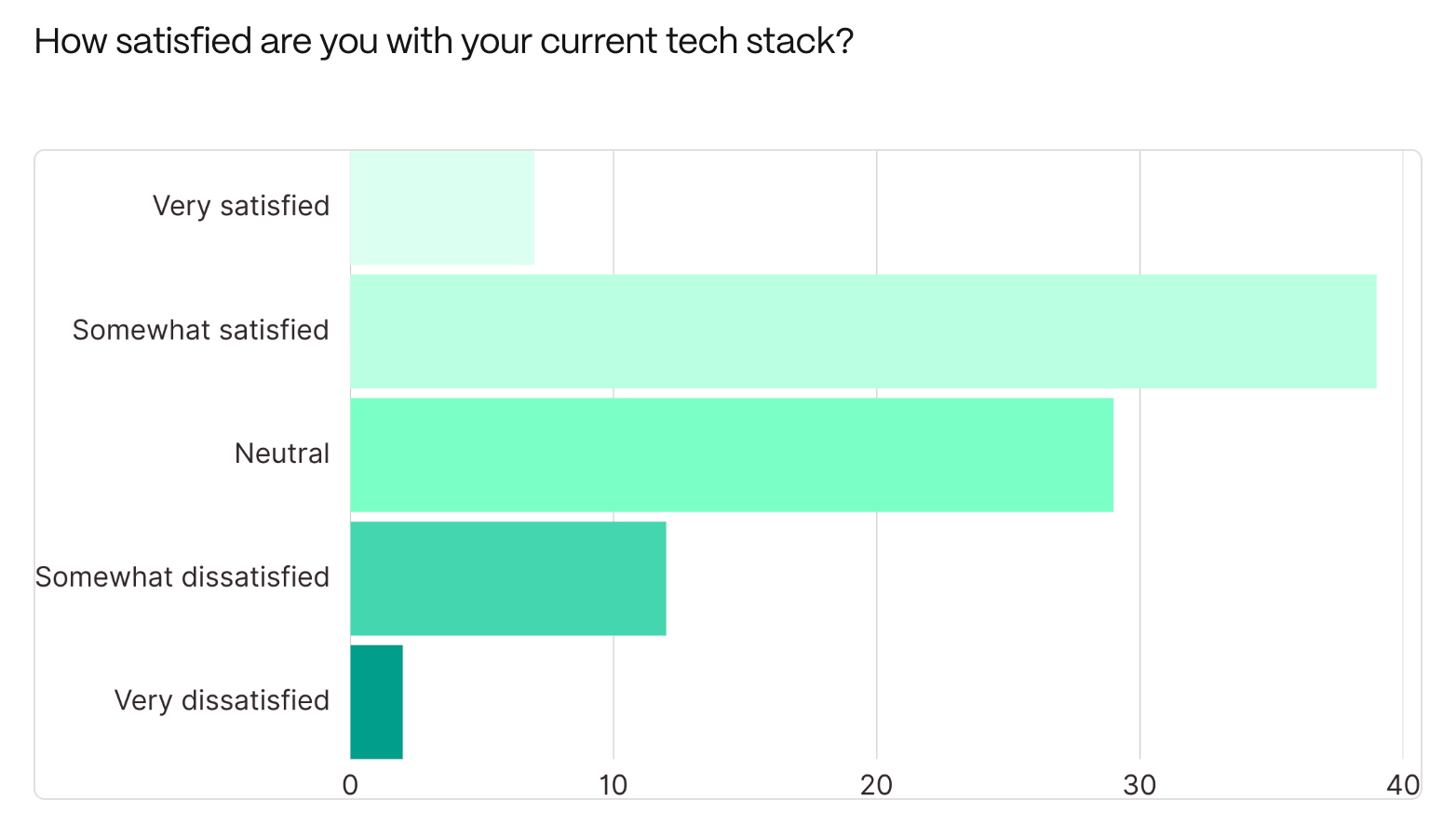
Buying more software rarely fixes a process nobody owns. In PwC’s 2026 Digital Trends in Operations Survey of 767 US operations and supply chain leaders, 89% said their technology investments had not fully delivered the expected results, and integration complexity topped the list of reasons.
A tool runs a process. It doesn't decide who owns it, and until someone does, the next system you buy inherits the same gap the last one did.
Retail and marketplace compliance
Adding retail or a marketplace changes the operations job faster than revenue does, because a second channel brings its own rules the first channel never had.
The same ShipBob survey found that 85.82% of surveyed brands sell on two or more channels and 77.4% sell through B2B or brick-and-mortar. Most growing brands hit this wall sooner than they expect.
Retailers score suppliers on delivery, and they fine the ones that miss it. Walmart asks suppliers to deliver on time 90% of the time and in full 95% of the time, and an operations hire with no retail background has never had to track either number.
Of the 64 operations profiles with DTC or ecommerce experience in our November 2026 candidate data, 18 mentioned EDI, chargebacks, OTIF or routing guides anywhere in their work history. That’s fewer than one in three.
Before hiring a DTC-only operator into a brand that's moving into retail, ask how they've handled routing guides, ship notices and deduction disputes. Our CPG team structure guide covers who to hire as a brand moves into retail.
When the problem is senior: head of ops, VP of ops, supply chain director or COO
Choose the senior seat based on which decisions the founder is ready to hand over, not revenue alone.
A head of operations runs fulfillment and inventory directly and builds the first repeatable process. A VP of operations designs the network, sets supplier terms, and hires the layer below.
Once sourcing and supply strategy become their own P&L line, a supply chain director owns them across regions, the seat we fill through supply chain executive search.
A COO owns the operating P&L and the leaders who report to that seat. Where an operations manager runs one function, the COO answers for the P&L across every function beneath the founder, and we run that search as COO executive search.
Revenue still sets a range for each seat. Our operations leadership tiers put the COO seat at roughly $50M and above, and the guide covers the rest.
At Hollow Socks, we placed a VP of operations to run logistics across Easy Street, the growing nine-figure DTC portfolio the brand belongs to.
At Nysonian, we built a VP of operations seat around a manufacturing facility move. Corporate strategy backgrounds would not have worked there, so the hire came from warehouse operations leadership. We interviewed 30-plus candidates, submitted 22, and reached an offer in 78 days.
All Security Equipment is the case for a COO below that range: a $20M brand whose founder wanted one in-person operator to take over day-to-day operations. We split the search into COO and VP of operations roles and sorted COO candidates into sales, finance and supply chain profiles. We evaluated 275 candidates, ran 54 phone screens, and the placement came in at $250,000 all-in compensation.
Put the brief on one page before you search. Our COO hiring guide scopes that seat with a one-page mandate naming the first three things the hire owns, the reporting line and two disqualifiers. That format works for any seat in the table above, and if you can’t write it, the search isn’t ready.
Name the symptom costing you the most and how you measure it today, then the decisions that move with the seat, such as purchase orders, supplier terms, 3PL selection and hiring rights. A fractional demand planner who can’t approve a purchase order is a different hire than a VP of operations who can. Add the channel and category, since retail or a regulated category changes which experience counts.
Set the 90-day goal from the metric the diagnostic attaches to the seat, such as forecast accuracy for a demand planner or on-time ship rate for an operations manager. Expect the page to change once candidates come in. At Decent Startup, we built the candidate profile with the founder and recalibrated it as real candidates came through.
Whichever part of the operation is breaking is the seat to fill first. In the searches we run, a narrow hire with clear decision rights does more than a broad executive title, and the title can wait until the scope is written down.
We recruit operations talent for DTC, ecommerce and CPG brands, from demand planners and operations managers to VPs and COOs, from a proprietary database of vetted ecommerce candidates. First interviews land within 5 business days for standard roles and within 10 business days for executive searches. Book a call.
FAQs
What does an ecommerce operations manager do?
An ecommerce operations manager runs the work after an order is placed: order processing, 3PL performance, order accuracy, returns, and the sync between Shopify, the warehouse and customer support. At most DTC brands it is the first dedicated operations hire, and the role absorbs shipping and carrier work until volume justifies a separate logistics manager.
Can software or automation replace an operations hire?
Usually not on its own. In PwC’s 2026 Digital Trends in Operations Survey of 767 US operations and supply chain leaders, 89% said their technology investments had not fully delivered the expected results, and integration complexity was the most cited reason. Software runs a process someone already owns. If nobody owns inventory or the 3PL, start with the hire.
Do I need a COO or a VP of operations?
Look at which decisions you are ready to hand over. A COO owns the operating P&L and the leaders below. A VP of operations designs the network, sets supplier terms and hires the layer below. Our guidance places the COO seat at roughly $50M and above, with exceptions when a founder hands over day-to-day operations entirely.
Connor Gross founded Constant Hire in 2024. An operator turned founder with deep experience building and scaling e-commerce brands. He previously sold an Amazon brand and generated over $30M in DTC revenue through private-label Shopify businesses. He now helps fast-growing DTC brands and agencies hire top talent across marketing, creative, ops, and sales. From E‑com Managers to TikTok Creators and Heads of Growth, he knows what great looks like, and how to recruit it.