Role Comparison
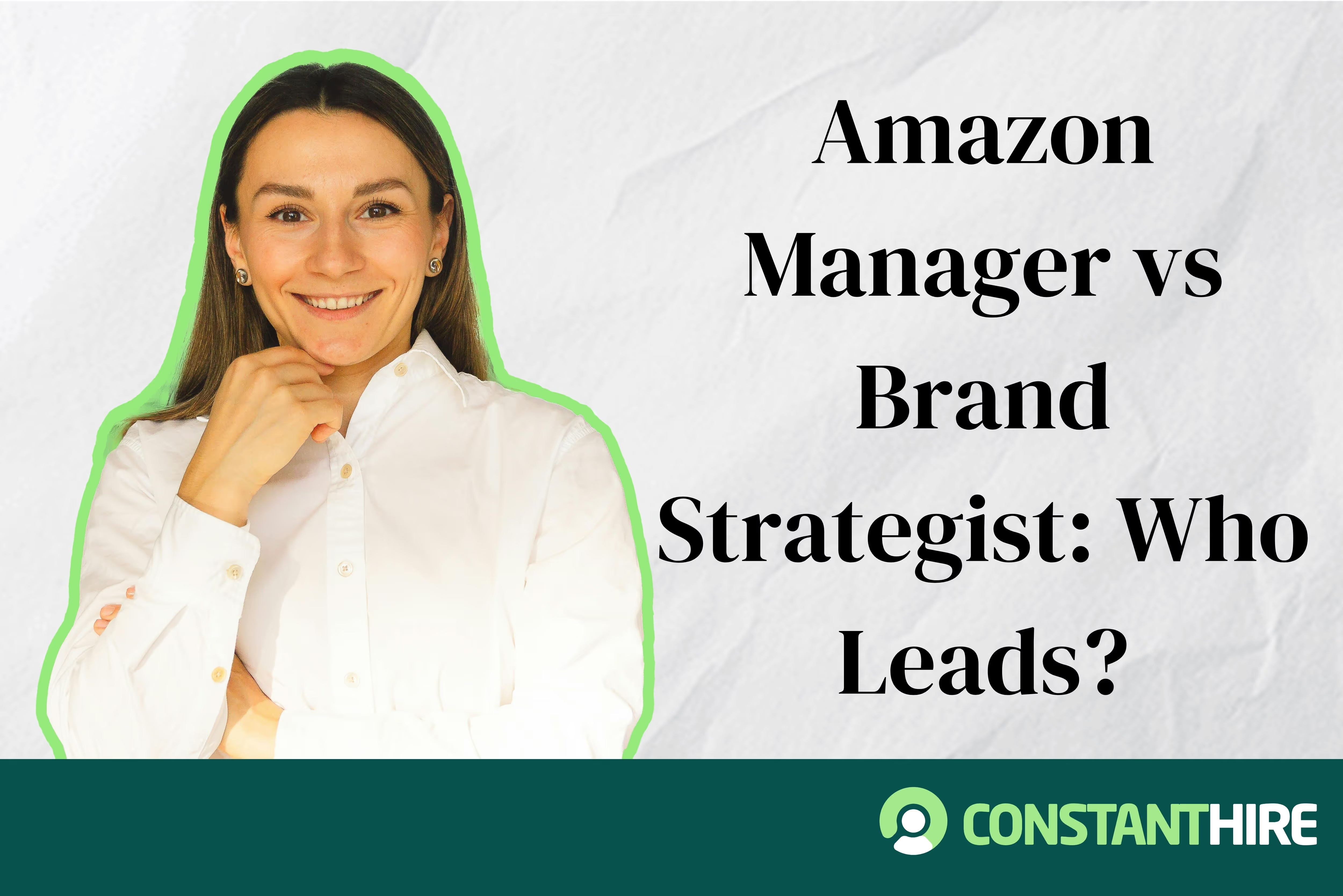
Amazon Manager vs. Brand Strategist: Who Leads?
Should an Amazon Manager or Brand Strategist lead your brand? Learn common hiring mistakes and how to choose the right leader for your growth stage.

Connor Gross
As brands scale on Amazon, the org chart usually breaks before revenue does.
Sales are growing. Ad spend is climbing. SKUs are multiplying. And suddenly, the question comes up in a leadership meeting: “Do we need a stronger Amazon Manager, or do we need someone to own the brand strategy?”
It’s a fair question, and one we hear constantly from DTC and Amazon-native brands when they’re searching for an ecommerce recruitment agency. The problem isn’t that one role is better than the other. It’s that many companies expect one person to do both, and that’s where growth starts to stall.
Before you make your next hire, it’s worth getting clear on who actually leads, and what leadership means at your stage.
An Amazon Manager (sometimes called an Amazon Brand Manager) is a platform specialist. Their job is to make Amazon as a channel perform efficiently, profitably, and consistently.
At a high level, they typically own:
Success is measured in concrete terms:
A strong Amazon Manager knows Seller Central inside out. They understand Amazon’s algorithms, how ads interact with organic ranking, and how small changes in listings or pricing affect performance.
But here’s the key distinction: An Amazon Manager is not inherently a business-wide leader. They execute within the channel. They don’t usually define the brand’s long-term direction.
A Brand Strategist operates at a different altitude.Instead of living inside one platform, they look across the entire business and ask higher-order questions:
Their responsibilities often include:
They care less about daily bid changes and more about directional decisions that shape the business.
A Brand Strategist doesn’t optimize ads. They decide where ads should even exist.
The most common mistake we see is role compression.
Brands hire an Amazon Manager and expect them to:
Or, they hire a Brand Strategist and expect them to:
Both scenarios fail. Not because the people are bad, but because the expectations are wrong.
Amazon is a demanding platform. Strategy is a demanding discipline. Asking one role to own both almost always leads to:
Either way, growth slows.
The right answer depends entirely on where your business is today.
If Amazon is your primary revenue driver and the fundamentals aren’t fully dialed in, the Amazon Manager leads by necessity.
At this stage:
Leadership often still sits with the founder or GM, but the Amazon Manager is the engine keeping the business moving.
Once Amazon is established and you’re expanding into DTC, wholesale, or retail, leadership needs to shift. This is where a Brand Strategist becomes essential.
Why?
Here, the Amazon Manager should still own execution, but within a strategic framework set by the Brand Strategist.
At scale, these roles separate cleanly.
This is where brands stop reacting and start planning.
High-performing brands are very clear about one thing: Leadership is not the same as execution.
When strategy and execution are split properly, Amazon Managers are able to move faster without second-guessing direction, creative aligns more tightly with performance goals, channel conflicts decrease, and decisions become intentional rather than reactive.
This doesn’t always mean hiring two full-time people. For some brands, it looks like:
The key is clarity. Someone must own the why.
Before posting a job or talking to recruiters, ask yourself:
Then hire accordingly.
When hiring an Amazon Manager:
When hiring a Brand Strategist:
A major red flag in either role: Someone who claims they can “own everything” without explaining trade-offs.
Here’s the truth most brands don’t want to hear:
Growth stalls when those lines blur.
At Constant Hire, we help brands define roles before they hire, because the wrong hire at the wrong stage is more expensive than waiting. We place Amazon Managers who know how to win on the platform, and brand leaders who know how to scale beyond it.
If you’re unsure who should lead next, that uncertainty is the signal. And it’s exactly the problem we solve every day.
Top talent on your calendar in under 5 days.